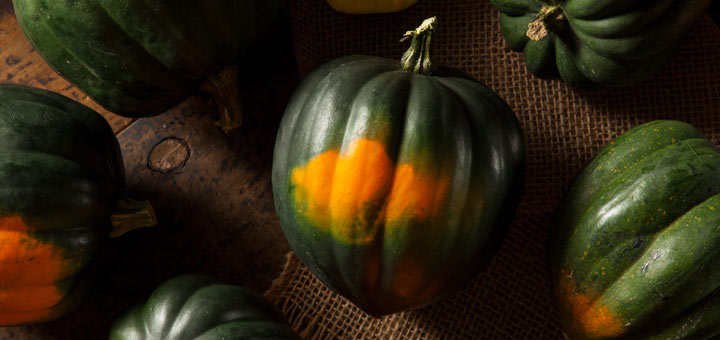
It is not hard to recognize an acorn squash because, well, it is the exact shape of an acorn. It has a ribbed green exterior with bright orange flesh and belongs to the Cucurbitaceae gourd family. Although acorn squash belongs to the same summer species as summer squash like zucchini and crookneck, its season is during late fall and winter. Many people enjoy it because it exhibits a sweet and nutty flavor and tender texture when cooked.
Acorn Squash Nutrition
Similar to other winter squash varieties, acorn squash provides a diverse mix of vitamins, minerals, and fiber. One cup of cubed, cooked acorn squash provides:
- Calories: 115
- Carbohydrates: 29.9 grams (g)
- Fiber: 9 g
- Protein: 2.3 g
- Vitamin C: 22.1 milligrams (mg)
- Folate: 39 micrograms (mcg)
- Iron: 1.91 mg
- Vitamin B6: 0.39 mg
- Magnesium: 88.2 mg
- Manganese: 0.49 mg
- Potassium: 896 mg
May Help Reduce Inflammation
There are numerous chronic diseases fueled by systemic inflammation. For this reason, dietitians encourage everyone to consume more antioxidant-rich foods, such as acorn squash. Antioxidants work to reduce inflammation by cleaning cells of harmful waste. Acorn squash contains vitamins A & C and manganese, all of which have antioxidant properties. It is particularly rich in carotenoids, like zeaxanthin, which are plant pigments that may help protect against cardiovascular disease, neurological disease, some cancers, and type 2 diabetes.
Boosts Digestive Health
With nine grams of fiber per cup, acorn squash is a great food to help you meet your recommended daily intake (RDI) of fiber. A diet rich in fiber can help contribute to digestive health, since the gut microbiome requires fiber to create a healthy habitat for beneficial bacteria. Additionally, more fiber in the diet can help prevent constipation. Acorn squash also has magnesium, which is known for its laxative and stool-softening properties.
May Support Healthy Vision
As we mentioned earlier, acorn squash is rich in carotenoids and vitamin A, both of which support eyesight. It also contains lutein, which has been linked to sharper vision. The most sensitive part of the retina in the eye is the macula, which has the highest concentration of photoreceptors. It is the portion of the retina where your sharpest vision is produced. Lutein and zeaxanthin help form the pigment in the macula that protects millions of photoreceptor cells located in the small area of the central retina.
Supports Immune Function
Although acorn squash doesn’t offer the same amount of vitamin C as a kiwi, guava, bell pepper, or orange does, it does provide about one-quarter of the RDI. Research shows that getting sufficient vitamin C every day can help prevent and treat respiratory and systemic infections. According to scientific studies, it is better to get your vitamin C through your food, as opposed to a supplement. The reason for this is because it may increase the bioavailability, due to the fact that food also contains other nutrients that impact how the body absorbs vitamin C.
May Help Reduce Blood Pressure
Researchers note that increasing your intake of potassium has a powerful effect on lowering blood pressure, especially when coupled with a low-sodium diet. Adding magnesium to the equation has an even more pronounced effect for blood pressure reduction. Acorn squash is a great source of potassium and magnesium and while the squash itself is not linked to lower blood pressure, the nutrients it provides may aid your efforts.

Vincent Stevens is the senior content writer at Dherbs. As a fitness and health and wellness enthusiast, he enjoys covering a variety of topics, including the latest health, fitness, beauty, and lifestyle trends. His goal is to inform people of different ways they can improve their overall health, which aligns with Dherbs’ core values. He received his bachelor’s degree in creative writing from the University of Redlands, graduating summa cum laude. He lives in Los Angeles, CA.