Working out is many things: exhilarating, fun, challenging, and it provides a long list of health benefits. What is not so enjoyable is the post-workout soreness that you experience after an intense workout session. Perhaps you joined a Pilates studio or you recently started hiking more seriously. If so, then you are familiar with the pain that can permeate your limbs the next day, but as unpleasant as the pain may be, sore muscles are quite normal after working out.
The official term for this post-workout muscle pain is “delayed onset muscle soreness.” You can typically start to experience this pain a few hours after you finish your workout. That is especially true if you don’t exercise regularly, or if you haven’t done so in a long time. Trying a new workout routine, circuit, or even a new move can cause post-exercise muscle soreness.
How To Alleviate This Pain
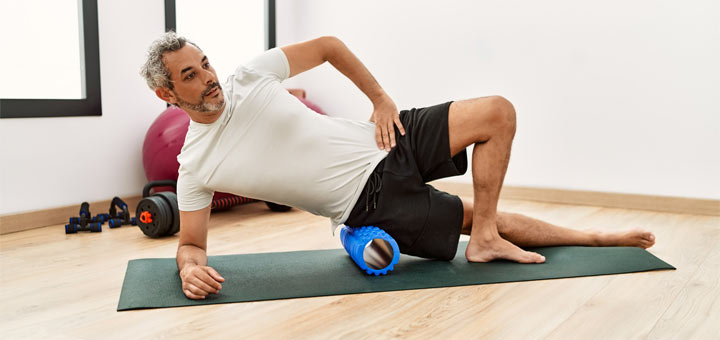
One of the easiest ways to help ease the pain is by using a foam roller, which is a cylindrical device made of foam. Depending on the type of foam roller, it can be softer or harder. Some of them vibrate to add a percussive massage element, while others are extra firm and textured, which enhances the intensity. These rollers help loosen tight muscles, getting rid of knots and reducing muscle soreness in the process.
You can roll any area of the body that experiences pain or discomfort. The different lengths, shapes, and densities make the recovery fully customizable to your needs. Good foam rollers can be expensive because cheaper materials will dent or lose firmness over time. Invest in a quality foam roller to experience the following benefits.
Localized Pain Relief
By using foam rollers or massage guns, you can target specific portions of a tight muscle. Doing so can provide near instantaneous relief, even if the area is extremely sore or tender. If you have experienced localized pain relief in an area due to stretching, you can expect a bigger benefit from foam rolling instead. The foam roller not only works to stretch the muscle, but also targets the sore area of the muscle belly. As long as you apply the proper amount of pressure and avoid a direct pressure point on bony structures, you can experience relief.
Improved Passive Range Of Motion
Foam rolling is a form of self-myofascial release that can help improve flexibility and muscle recovery. Since foam rolling loosens the muscle fibers, you can expect a direct improvement in flexibility following your session. By foam rolling, you can improve localized range of motion by 10-15% temporarily. That is more important for people who regularly engage in activities that require a large range of motion. That said, it is equally beneficial for people who need help maintaining day-to-day activities.
Improved Mobility
There is a difference between flexibility and mobility. Although the two are related, they are not the same. Improving passive range of motion through flexibility training has a direct affect on your ability to move through larger ranges of motion (mobility). Foam rolling directly improves mobility as a result of improving passive range of motion.
Increased Blood Flow
One study reported a 75% increase in total blood flow to an area directly after foam rolling. Not only does improved blood flow enhance recovery of the affected tissues, but it also helps prepare the body for movement or activity. This can help reduce delayed onset muscle soreness when applied post workout or after a strenuous activity.
Accelerated Recovery From Strenuous Activity
By improving blood flow to the area and reducing inflammation, foam rolling can help muscles recover more quickly after engaging in strenuous activity. Foam rolling is also relaxing, and the enjoyability of a recovery tool is extremely crucial, as it makes you want to do it more often. Various studies confirm that foam rolling after strenuous activity increases anti-inflammatory proteins and reduces pro-inflammatory proteins. That results in less inflammation and aids recovery.

Vincent Stevens is the senior content writer at Dherbs. As a fitness and health and wellness enthusiast, he enjoys covering a variety of topics, including the latest health, fitness, beauty, and lifestyle trends. His goal is to inform people of different ways they can improve their overall health, which aligns with Dherbs’ core values. He received his bachelor’s degree in creative writing from the University of Redlands, graduating summa cum laude. He lives in Los Angeles, CA.