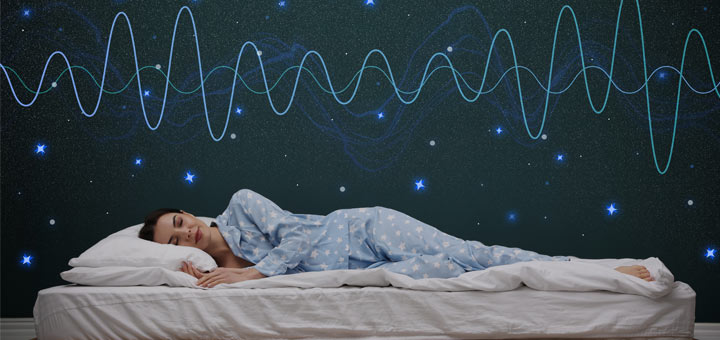
As you get older, anxious feelings can stick around longer than usual. If you have noticed this, you are not alone. A lot of people find that anxiety becomes harder to regulate with age, and scientists just assumed that this was a byproduct of aging brains and accumulated stress for many years. New research, however, points to a different culprit: what is happening (or not happening) during your deepest phase of sleep.
Studying Brain Activity While Sleeping
At UC Berkeley, researchers aimed to understand why anxiety symptoms typically increase with age. The primary question was if sleep played a role. Researchers recruited 61 cognitively healthy adults over the age of 65 with varying levels of anxiety. Each participant spent one night in a sleep lab with EEG monitoring, which is a noninvasive test that records the brain’s electrical activity. They also completed anxiety assessments before and after sleep, in addition to undergoing brain imaging the morning after.
Researchers also observed a subset of 24 participants over about four years to see how changes in sleep correlated with changes in anxiety. The primary focus was slow-wave activity (SWA), the brain waves that define the deepest stage of non-REM sleep. During this phase, the body does most of its restorative work, and scientists believe the brain does most of its emotional recalibration in this stage as well.
Impaired Deep Sleep Predicted Higher Next-Day Anxiety
The study revealed that participants with reduced slow-wave activity at night reported higher next-day anxiety. That effect was very specific to slow waves. Other sleep features, such as REM sleep, did not reveal the same relationship. Additionally, the link held up after researchers controlled for age, gender, trait anxiety levels, sleep efficiency, and total sleep time. Basically, the determination was that it wasn’t just that anxious people slept poorly; rather, it was that impaired deep sleep disrupted the brain’s ability to regulate anxiety overnight.
Data from the long-term study confirmed this. Participants in the subset group showed increased anxiety after the four-year period. Researchers noted that they showed expected age-related decline in slow-wave activity over four years.
What’s Behind This Connection?
Researchers looked at brain imaging to try and find the connection. Atrophy in emotion-processing regions of the brain was linked to a reduction in slow-wave generation. Those areas are the same regions that tend to shrink with age and are implicated in cognitive decline. After analyzing the mechanism behind this change, it was clear that slow-wave activity was fully responsible for the connection between brain atrophy and next-day anxiety.
That ultimately means that atrophy alone was not causing anxiety. Atrophy reduced the brain’s capacity to generate enough slow waves needed for overnight emotional regulation. Researchers note that despite the presence of age-related brain changes, intact deep sleep may help promote emotional stability. Deep sleep ultimately rescues the brain’s nightly recalibration process.
How Do You Protect Deep Sleep As You Age?
Slow-wave sleep appears to play a crucial role in overnight anxiety regulation. For this reason, protecting deep sleep as you age becomes paramount. Below, you will find evidence-backed strategies to help achieve a better night’s sleep:
- Keep a consistent sleep schedule because the brain’s ability to generate slow waves is closely tied to your circadian rhythm, the body’s internal clock that regulates sleep cycles. Go to bed and wake up at roughly the same time each day to support the biological processes necessary for deep sleep.
- Manage stress during the day, not just at night. According to research, daytime stress can shift the architecture of your sleep. Basically it shifts away from deep sleep toward lighter sleep stages. Account for recovery time throughout the day to help persevere your slow waves at night.
- Limit your consumption of alcohol close to bedtime because it can fragment your sleep, suppressing slow-wave activity later in the night.
- Research found that exercise can increase slow-wave sleep, especially when done regularly. Even moderate activities, such as walking, can make a difference in your sleep.

Vincent Stevens is the senior content writer at Dherbs. As a fitness and health and wellness enthusiast, he enjoys covering a variety of topics, including the latest health, fitness, beauty, and lifestyle trends. His goal is to inform people of different ways they can improve their overall health, which aligns with Dherbs’ core values. He received his bachelor’s degree in creative writing from the University of Redlands, graduating summa cum laude. He lives in Los Angeles, CA.