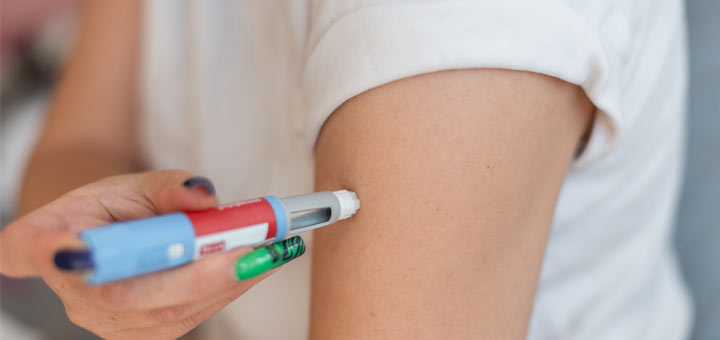
It’s no secret that people can experience a wide range of side effects when taking GLP-1 injectables like Wegovy or Ozempic. They can also be very expensive, so some people have started experimenting with a simple approach: microdosing. Basically, users take less than the standard dosage. In a recent survey, researchers found that nearly one out of every seven injectable GLP-1 users tried microdosing. Is that method actually effective, though?
Why Are People Microdosing GLP-1s?
The FDA-approved dosages for GLP-1s were given the green light to primarily manage type 2 diabetes or aid weight loss in obese adults. The dosages range from 0.25 milligrams (mg) to 2.5 mg once per week, with gradual increases over time. Lower GLP-1 doses are what is known as “off label,” a common and legal practice in which a person uses an FDA-approved drug in a way not formerly endorsed by the agency. Some people microdose under a doctor’s guidance, while others get lower-dose prescriptions via other avenues without ever speaking to a clinician.
The choice to microcode GLP-1s could be to avoid side effects, such as nausea and vomiting. It may also be to reduce overall cost, as GLP-1 injections can cost as much as $500 per month without insurance. Sometimes, users microdose because they do not want to lose too much weight. Another reason is because users transition to a lower dose after reaching their weight loss goal in order to maintain results.
Is There Evidence That Microdosing Works?
Microdosing is used in clinical settings, but it is not enforced by GLP-1 manufacturers. There is also limited research on whether smaller or less frequent doses are effective. It is not something that has been studied, so people are doing it at their own risk. People who meet the criteria for a GLP-1 prescription may not find success reaching their goals if they microdose the drug. As a reminder, to qualify for the drug, a person has to have a body mass index of 30 or higher (or between 27 and 30) with a weight-related condition.
It is possible, however, that an alternative dosing strategy may yield results for some people, but not others. A small case series from February 2027 offers some support about microdosing. On average, people who had success with standard weekly GLP-1 treatment were able to maintain weight loss and other metabolic improvements after they reduced how often they took the medication.
What To Consider Prior To Microdosing
Should you decide to lower or adjust your dose of medication, consider discussing it with a clinician or healthcare professional. They can help you account for any existing health conditions, side effects, or other factors. Ideally, any prescribing should be done by a provider with experience with the medication.
If you get a GLP-1 medication through a Telehealth company that advertises microdosing, do your due diligence first. Make sure to research the company and its providers and ask key questions. How do they determine appropriate treatment and what clinical criteria do they use for microdosing? If one injection per week does not work for you, other options may be better for your health. There are new oral GLP-1 drugs that may be better for your system. Whatever the case, consult a healthcare professional to make the most educated decision.

Vincent Stevens is the senior content writer at Dherbs. As a fitness and health and wellness enthusiast, he enjoys covering a variety of topics, including the latest health, fitness, beauty, and lifestyle trends. His goal is to inform people of different ways they can improve their overall health, which aligns with Dherbs’ core values. He received his bachelor’s degree in creative writing from the University of Redlands, graduating summa cum laude. He lives in Los Angeles, CA.