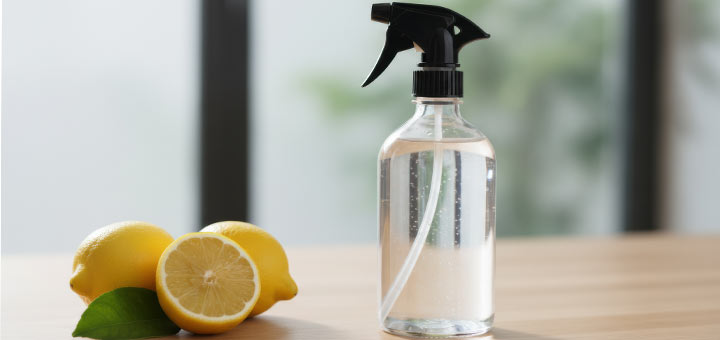
Sometimes, you feel like bleach is the only cleaning agent that will get the job done. You might be in a bit of a dilemma, though, especially if you are trying to switch to a non-toxic lifestyle. Chlorine bleach is not necessarily the best thing for your health, but it does tackle tough cleaning jobs. The non-toxic bleach alternative in this article is beautifully effective without the side effects of traditional bleach. And it’s only made with three simple ingredients you probably have in your house.
Why Is Chlorine Bleach Bad For You?
Traditional chlorine bleach can be fatal if you ingest it. If you have little ones running around your home, you may not want something like that in the house. Bleach contains sodium hypochlorite and other potential stabilizers, perfumes, and surfactants, depending on the brand. You can experience irritation of the mouth, throat, and gastrointestinal tract if you swallow household bleach. That can result in vomiting, abdominal pain, and nausea. Swallowing concentrated bleach products can permanently damage the digestive system, or even result in death.
Bleach can also cause poisonous effects, including tissue damage and skin burns, if you swallow or inject it into the skin. It is always best to wear protective gloves when cleaning with bleach, as it can irritate and burn the skin. Typically, contact with bleach can cause redness, pain, and irritation. Only in severe cases can one experience ulcers, blisters, and long-term scarring. If your skin comes in contact with bleach, make sure to rinse the area with water for 10 to 20 minutes.
Hydrogen Peroxide For Cleaning
On our website, you can find many cleaning products that contain distilled white vinegar. The non-toxic bleach alternative in this article does not contain it; rather, it focuses on hydrogen peroxide as the cleaning agent. Hydrogen peroxide can be helpful for disinfecting and stain removal. Sometimes, you can use a 50/50 mix of hydrogen peroxide and water to clean. Because hydrogen kills germs, it is a valuable cleaning agent, especially for the following objects and surfaces:
- Doorknobs
- Counters
- Cutting boards
- Refrigerators
- Mirrors
- Toys
- Toilets
- Sinks and bathtubs
- Garbage cans
You can also mix a small amount of hydrogen peroxide in a large bowl of water to clean your fruits and vegetables. Soak your produce items in the bowl before rinsing and drying them. That method helps remove germs and pesticides, and may even help your produce items last longer. Finally, you can spray hydrogen peroxide on clothing or carpet stains to help remove them. Some people even use hydrogen peroxide to clean nail clippers, tweezers, eyelash curlers, and other beauty tools!
Non-Toxic Bleach Alternative
Ingredients:
- 2.5 cups distilled water
- 1.25 cups hydrogen peroxide
- 1/4 cup lemon juice (either store bought or freshly squeeze)
Instructions:
- Add all of the ingredients to a large storage jar or spray bottle. Close the lid and swirl to combine.
- Store the liquid at room temperature in a dark place to extend the shelf life. For the longest shelf life, store the mixture in an amber glass jar.
- For cleaning, you can use this on enameled sinks, some tile and grout, and countertops. You can do a small patch test in one area of the surface you want to clean to make sure it does not negatively affect the surface.

Vincent Stevens is the senior content writer at Dherbs. As a fitness and health and wellness enthusiast, he enjoys covering a variety of topics, including the latest health, fitness, beauty, and lifestyle trends. His goal is to inform people of different ways they can improve their overall health, which aligns with Dherbs’ core values. He received his bachelor’s degree in creative writing from the University of Redlands, graduating summa cum laude. He lives in Los Angeles, CA.