Edema, or fluid retention, affects nearly one in five adults, particularly in the legs. It is very common during pregnancy and people over the age of 65. This widespread public health issue is often caused by aging, medication side effects, underlying health conditions like kidney disease, or venous insufficiency.
If you develop edema, it makes it very difficult for blood to circulate from the legs, so it pools in the veins and leaks into nearby tissues. That can lead to trigger swelling, but edema is not specific to the legs, although that is where fluid most commonly accumulates. The reason for that is because the legs are farther away from the heart than the arms, for example. While edema is more common in elderly people, it can be caused by a sedentary lifestyle, eating a high-sodium diet, and taking certain medications. Fortunately, there are lifestyle changes you can make to alleviate mild or temporary edema.
Elevate Your Feet
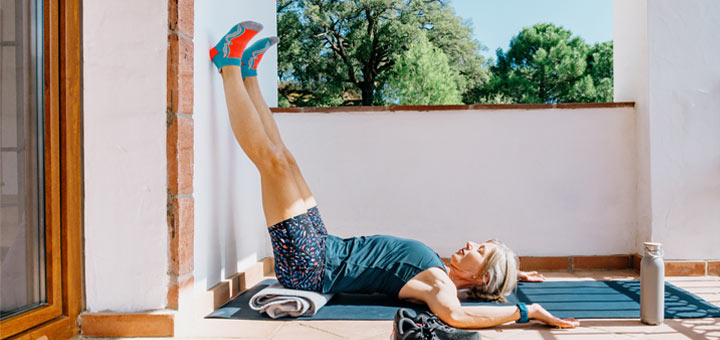
Combat swelling in the legs by elevating your feet, preferably above your heart. You can place a pillow under your legs when laying flat. You can also put your feet up on the wall when lying flat on the floor. The classic yoga pose Legs Up The Wall is a great way to encourage circulation from the legs back to your heart. Elevating can be very helpful for swelling because it encourages excess fluid in the legs to drain out and up away from where it is accumulating.
Massage Your Legs
Take edema treatment into your own hands by doing a self-massage, pulling or stroking the trapped fluid in the legs upward. Regular massage, in addition to dry brushing, can help break up lymphatic fluid. You can also find a licensed massage therapist to perform lymphatic drainage massage, as they know how to stimulate lymph nodes and massage swollen tissues to aid drainage.
Wear Compression Socks
Most healthcare providers recommend compression socks as an effective way to reduce swelling in the legs and ankles. Compression socks are not regular old socks; rather, they are tighter and made to increase pressure on the legs. This ultimately helps the blood pooling in the lower body return back up to the heart. By preventing fluid from building up in the lower legs, compression socks may help reduce swelling and pain that stems from it.
Walk More Often
One of the best ways to encourage lymphatic drainage and movement is to move your body. Many health experts agree that walking is beneficial for overall health, as it is an easy, accessible form of low-impact exercise. One of the primary benefits of exercise, specifically cardiovascular exercise, is that it encourages blood circulation and strengthens the heart. When you walk, you activate your leg muscles, which aids lymphatic drainage and pumps excess fluid toward your heart.
Eat Less Salt
Sodium contributes to swelling, so adjusting your eating habits may help reduce swelling in your lower extremities. Health experts state that eating too much salt can cause the body to retain water, which can trigger swelling as a result. If you notice that your legs are swollen and you eat a high-sodium diet, consider reducing your salt intake to help. Make sure to read nutritional labels, especially sauces and things of that nature, as those can contain sneaky levels of excess sodium.

Vincent Stevens is the senior content writer at Dherbs. As a fitness and health and wellness enthusiast, he enjoys covering a variety of topics, including the latest health, fitness, beauty, and lifestyle trends. His goal is to inform people of different ways they can improve their overall health, which aligns with Dherbs’ core values. He received his bachelor’s degree in creative writing from the University of Redlands, graduating summa cum laude. He lives in Los Angeles, CA.