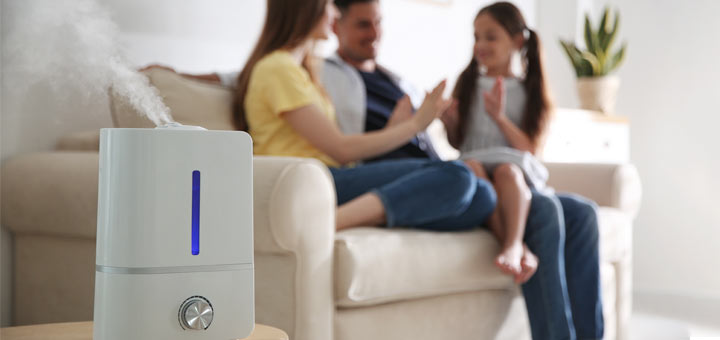
With each passing year, scientists gain more insight to how people can better improve sleep quality. For example, there are many risks associated with indoor air pollution, including effects on sleep and blood pressure. Is using an air purifier overnight the solution hiding in plain sight? Perhaps, but how does running an air purifier nightly affect these aspects of your health? We aim to uncover that in this article.
How Using An Air Purifier May Affect Sleep
It is possible that sleeping with an air purifier nightly may improve sleep quality and duration. Most of the existing research has focused on air pollution’s effects on sleep apnea. Scientists explain that indoor air pollution can trigger upper respiratory irritation and edema (swelling of body parts). In more recent studies, researchers looked at connections between indoor air quality and sleep in a general sense. The results have been consistent, suggesting that cleaner air quality in the bedroom can improve overall sleep quality.
A 2023 study found that people who slept with a HEPA air filter, which can remove 99.97% of dust, mold, pollen, and bacteria from the air, slept longer. The subjects also spent more time in bed compared to those who did not use a HEPA air filter. Another report from 2023 found that increasing air flow in the bedroom reduced carbon dioxide concentrations and levels of particulate matter. Basically, particulate matter is a mixture of solid and liquid particles that form microscopic, and potentially dangerous, droplets suspended in the air.
Researchers attribute air pollution’s effects on sleep to its ability to cause nasal and throat inflammation. It may also trigger oxidative stress, which is a condition that causes tissue and cell damage.
Air Purifiers Improve Air Quality
An air purifier works to reduce airborne pollutants that lead to poor sleep, among other health issues. They trap or neutralize substances or gasses in the air, and the type of purifier you have may trap these particles or gasses using a specialized filter, ultraviolet light, or electrical charge. Different types of air purifiers address specific indoor pollutants. Indoor air pollutants can come from a variety of sources, but are generally separated into particulate matter or gaseous pollutants. Reducing these pollutants can ultimately help you breathe better, which may lead to better sleep.
Could A Nightly Air Purifier Affect Blood Pressure?
Regular exposure to air pollution can impair blood vessel function and cause inflammation. It can even raise blood pressure and, over time, increase the risk of adverse cardiac events. Several studies indicate that using an air purifier at night improves blood pressure levels. That is especially true for people living in areas with heavier pollution, for example, high-traffic areas, poorly ventilated spaces, or places prone to wildfires or smog.
A 2021 meta-analysis examined studies measuring the systolic blood pressure of people living in higher-pollution areas before and after using an air purifier. Researchers monitored people for periods ranging from a week to several weeks. The average result was that using an indoor air purifier significantly reduced blood pressure.
Another paper from 2024 found that using an indoor air purifier in the primary activity room for one year was linked to a significant drop in diastolic blood pressure in older adults. Researchers note that filtering systems, such as air purifiers, reduce exposure to outdoor and indoor sources of pollution. That ultimately reduces the development or worsening of cardio metabolic disorders, including high blood pressure.

Vincent Stevens is the senior content writer at Dherbs. As a fitness and health and wellness enthusiast, he enjoys covering a variety of topics, including the latest health, fitness, beauty, and lifestyle trends. His goal is to inform people of different ways they can improve their overall health, which aligns with Dherbs’ core values. He received his bachelor’s degree in creative writing from the University of Redlands, graduating summa cum laude. He lives in Los Angeles, CA.