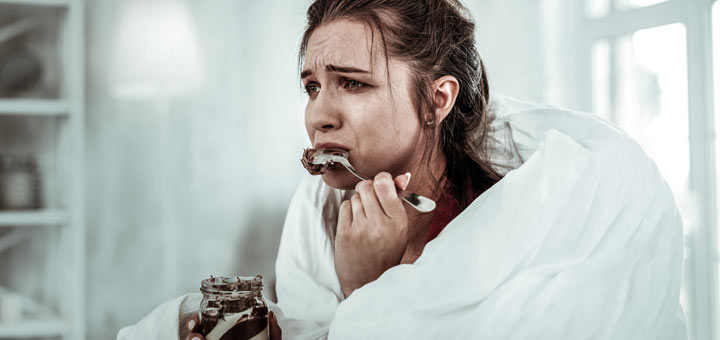
If you run to the fridge or pantry when you are upset or feel down, you are not alone. It is very common for people to turn to food for comfort as a way of coping with personal struggles or big, difficult things. When you eat in response to the emotions you experience, that is emotional eating. Almost every person does it at some point. The body needs food to survive, so it makes sense that eating ignites the brain’s reward system and makes you feel better.
When emotional eating becomes habitual and you have no other ways to cope with feelings, it can become a problem. Eating does not address the core issue, no matter how it makes you feel in certain moments. If you feel stressed, bored, lonely, sad, tired, or anxious, food will not fix those feelings. The unfortunate reality is that the cycle of turning to food to cope can trigger feelings of shame and guilt, which are more difficult feelings to deal with.
It is hard to get away from food, as it is the center of so many things that you do. Food is celebratory, but you can also make food for someone going through a rough time to show you care. It is only natural to have an emotional relationship or connection with food. But you want to be able to make conscious decisions about when, what, and how you eat.
What Causes Emotional Eating?
There are numerous reasons that trigger the urge to eat. The most common external reasons for emotional eating can be:
- Health issues
- Work stress
- Relationship issues
- Financial worry
It is more common for people who follow restrictive diets, or have a history of restrictive eating, to eat emotionally. Other potential causes can include:
- Emotion dysregulation (the inability to manage emotional responses)
- Lack of introspective awareness (realizing how you feel)
- Reversed hypothalamic pituitary adrenal (HPA) stress axis (under-active cortisol response to stress)
- Alexithymia (lacking ability to understand, process, or describe emotions)
Is Emotional Eating An Eating Disorder?
On its own, emotional eating is not an eating disorder. That said, it can be an indication of one and potentially lead to the development of an eating disorder. Disordered eating can look like:
- Labeling foods as “bad” or “good”
- Frequent dieting or restrictive eating patterns
- Irregular meal timing
- Being rigid with food choices
- Feelings of guilt or shame after eating foods you view as “unhealthy”
- Eating in response to emotions as opposed to hunger cues
- Obsessive thoughts about food that interfere with your daily life
The Academy of Nutrition and Dietetics states that eating disorders are diagnosed when a person’s eating behaviors meet certain criteria. A lot of people have irregular eating behaviors, but they don’t meet the criteria for eating disorders. It should be noted that you do not have to develop an eating disorder to seek help. Everyone deserves to have a good relationship with food. If you think that you may have disordered eating behaviors, speak with a mental health expert or dietitian to help your situation.
Emotional Eating vs. Physical Hunger
You need food to live, so it is very natural to need food and desire certain textures or tastes. How do you tell the difference between emotional and physical hunger cues? It can be tricky because you can occasionally experience a combination of both. Here are some clues to help you tell the difference:
- Emotional hunger comes on suddenly.
- You may not notice fullness when you eat emotionally. It does not prevent you from wanting to eat more.
- Emotional eating is triggered by the need to comfort yourself.
- Physical hunger develops slowly over time.
- You feel the sensation of fullness and take that as a cue to stop eating when you are not eating emotionally.
- Physical hunger is tied to the last time you ate, not how you feel.
Are You An Emotional Eater?
People who experience emotional eating may feel:
- An urge to eat even when they are not physically hungry
- Out of control around certain foods, especially snacks
- Food is calming or rewarding
- An urge to eat when they experience powerful emotions

Vincent Stevens is the senior content writer at Dherbs. As a fitness and health and wellness enthusiast, he enjoys covering a variety of topics, including the latest health, fitness, beauty, and lifestyle trends. His goal is to inform people of different ways they can improve their overall health, which aligns with Dherbs’ core values. He received his bachelor’s degree in creative writing from the University of Redlands, graduating summa cum laude. He lives in Los Angeles, CA.