Herbal support for healthy eyes
Seven botanicals selected for eye and vision wellness
Healthy vision depends on more than the eyes alone. The nervous system, circulation, antioxidant defenses, and adequate nutrition all contribute to normal visual function. Eye Tea combines seven botanicals in an easy-to-enjoy herbal tea for eye health designed to support the eyes as part of a broader wellness routine.*
Bilberry leaf, calendula flower, mullein leaf, fennel seed, eyebright herb, cassia seed, and stevia leaf each contribute a different botanical profile. Together, they provide naturally occurring flavonoids, carotenoids, phenolic compounds, tannins, and other plant constituents associated with traditional eye and whole-body wellness.*
Bilberry and eyebright for eye wellness
Two traditional herbs with a long history of use
Bilberry and eyebright are among the most recognizable herbs in Eye Tea.
Bilberry leaf naturally provides flavonoids, tannins, and phenolic compounds that contribute antioxidant activity. Eyebright has an extensive history of traditional use in herbal preparations centered on eye comfort and normal visual function.*
Combining these herbs allows Eye Tea to provide a broader botanical approach than relying on a single eye-supporting plant.*
Antioxidant support for the eyes
Helping protect against everyday oxidative stress
The eyes are metabolically active organs and are continually exposed to light and environmental factors. Antioxidant nutrients and plant compounds help the body's normal defenses manage oxidative stress.
Eye Tea contains several sources of naturally occurring antioxidant phytochemicals. Bilberry leaf provides polyphenols, calendula contains carotenoids and flavonoids, and eyebright supplies phenolic compounds and additional flavonoids.*
These compounds make the tea a useful addition to an antioxidant-focused eye wellness routine.*
Calendula and naturally occurring carotenoids
Colorful plant pigments with nutritional value
Calendula's distinctive yellow and orange flowers contain naturally occurring carotenoids, including lutein-related and zeaxanthin-related compounds, along with flavonoids and triterpenes.
Carotenoids are especially relevant to eye nutrition because certain carotenoids are naturally concentrated in ocular tissues.
Eye Tea uses calendula as part of its broader botanical approach to eye nutrition and visual wellness rather than as a standardized lutein supplement.*
Supporting circulation and nourishment
Healthy blood flow helps nourish eye tissues
Like every organ, the eyes rely on circulation to receive oxygen and nutrients and carry away normal metabolic byproducts.
Several botanicals in Eye Tea, including bilberry, calendula, and fennel, contribute naturally occurring plant compounds traditionally associated with circulatory and tissue wellness.*
This broader approach recognizes that maintaining healthy eyes involves supporting the systems that nourish ocular tissues, not simply focusing on the eye in isolation.
Botanical support for visual comfort
A soothing addition to a screen-heavy lifestyle
Phones, computers, televisions, reading, detailed work, and other visually demanding activities can leave the eyes feeling temporarily tired after prolonged use.
Eye Tea provides a simple herbal ritual that can complement healthy eye habits such as taking regular screen breaks, blinking frequently, using appropriate lighting, staying hydrated, and having routine eye examinations.
The tea is designed to support normal eye function and visual comfort.* It is not a substitute for prescription glasses, contact lenses, or professional treatment of an eye condition.
Eye wellness and the nervous system
Vision depends on communication between the eyes and brain
Seeing is not solely an ocular process. The eyes capture visual information, but the nervous system and brain are responsible for transmitting and interpreting those signals.
Eye Tea includes botanicals traditionally used to complement nervous system and overall wellness, providing a more holistic approach to maintaining normal visual function.*
Supporting general health through adequate sleep, balanced nutrition, regular physical activity, and appropriate eye care remains important alongside botanical supplementation.
Eye Tea vs. Eye Formula
Herbal tea vs. concentrated capsules
Eye Tea and Eye Formula are the closest products to compare in our eye wellness line because both are designed to support healthy eyes and normal vision.*
The formulas share four key botanicals: bilberry leaf, calendula flower, fennel seed, and eyebright herb.
Eye Tea contains seven botanicals delivered as an herbal beverage. In addition to those four shared herbs, it contains mullein leaf, cassia seed, and stevia leaf.
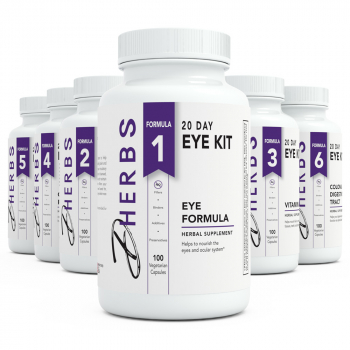
Eye Formula contains 11 botanicals in vegetarian capsules and expands the formula with chamomile, ginkgo biloba, lucuma, cayenne, carrot, goji berry, and goldenseal.
Choose Eye Tea when you prefer a soothing herbal tea for eye support.
Consider Eye Formula when you prefer convenient capsules and a broader botanical formula for daily eye wellness.
The products can also complement one another as part of a broader eye wellness routine.*
Eye Tea vs. Vitamin A
Multi-herb eye support vs. targeted vitamin A nutrition
Vitamin A plays an essential role in maintaining normal vision, but Eye Tea is not a conventional vitamin A supplement.
Eye Tea provides seven botanicals for broad eye, antioxidant, circulatory, and visual wellness support.*
Dherbs Vitamin A takes a more targeted nutritional approach using carrot root, leafy greens, algae, berries, and eye-supporting herbs as plant-based sources of carotenoids and other nutrients.*
Choose Eye Tea when you want a drinkable herbal approach to eye wellness.
Consider Vitamin A when your primary goal is more specifically focused on plant-based vitamin A and carotenoid nutrition.*
Eye Tea vs. lutein supplements
Botanical diversity vs. a standardized carotenoid
Lutein supplements generally focus on providing a measured amount of one carotenoid, sometimes paired with zeaxanthin.
Eye Tea takes a different approach. Calendula naturally contains carotenoids, while bilberry, eyebright, fennel, mullein, and cassia provide additional botanical compounds.
Choose Eye Tea when you want multi-herb eye wellness support in tea form.*
Choose a standardized lutein supplement when your primary goal is obtaining a specific measured quantity of lutein.
Eye Tea vs. Pinhole Glasses
Nutritional wellness vs. temporary optical focusing
Eye Tea provides internal botanical and nutritional support for eye and vision wellness.*
Pinhole Glasses use a completely different approach. The opaque lenses contain small perforations that restrict peripheral light and can temporarily increase depth of focus while the glasses are being worn.
Choose Eye Tea when you want herbal nutritional support for the eyes.
Consider Pinhole Glasses when you want a non-prescription optical tool for short periods of visual focusing and eye exercise.
Neither product replaces prescription eyewear or professional eye care.
Seven botanicals for eye and visual wellness
Bilberry leaf
Bilberry leaf comes from Vaccinium myrtillus, the same plant that produces the dark-colored bilberry fruit.
Notable compounds: Bilberry leaf naturally contains flavonoids, tannins, phenolic acids, proanthocyanidin-related compounds, and other polyphenols.
Bilberry leaf is included for its history of traditional use in eye wellness and its naturally occurring antioxidant compounds.* Bilberry leaf should not be confused with bilberry fruit extract. The fruit is particularly known for anthocyanins, while the leaf has a different phytochemical profile.
Calendula flower
Calendula's colorful flowers provide a diverse range of plant pigments and antioxidant compounds.
Notable compounds: Lutein-related carotenoids, zeaxanthin-related carotenoids, flavonoids, triterpenoids, faradiol esters, and phenolic compounds.
Notable vitamins and minerals: Calendula naturally contains carotenoids that can act as vitamin A precursors depending on the specific compound.
Calendula is included to provide antioxidant carotenoids and flavonoids and complement the formula's focus on healthy ocular tissues and visual wellness.*
Mullein leaf
Mullein is a soft-leaved botanical with a long history of use in traditional herbal preparations.
Notable compounds: Mucilage polysaccharides, flavonoids, saponins, iridoid glycosides, phenolic acids, and other plant compounds.
Notable vitamins and minerals: Mullein naturally contains varying amounts of potassium, calcium, magnesium, iron, and other trace minerals.
Mullein is included to complement the formula's broader approach to nervous system, tissue, and whole-body wellness.*
Fennel seed
Fennel is an aromatic botanical that has been used in culinary and traditional wellness practices for centuries.
Notable compounds: Anethole, fenchone, estragole, flavonoids, phenolic acids, and volatile oils.
Why we use it: Fennel has a history of traditional use in preparations for eye and visual wellness while also contributing aromatic compounds to the tea.*
Eyebright herb
Eyebright, or Euphrasia, gets its common name from its extensive traditional association with the eyes.
Notable compounds: Aucubin and related iridoid glycosides, flavonoids, tannins, phenolic acids, and other polyphenols.
Eyebright is included because of its long history of traditional use for eye comfort, visual wellness, and normal eye function.*
Cassia seed
Cassia seed has a long history of use in traditional Asian herbal practices, particularly in preparations associated with the eyes.
Notable compounds: Anthraquinones, naphthopyrones, flavonoids, phytosterols, and other phenolic compounds.
Notable vitamins and minerals: Cassia seed naturally contains minerals including calcium, magnesium, potassium, iron, zinc, and manganese in varying amounts.
Cassia seed is included because of its traditional association with visual clarity, eye refreshment, and eye wellness.*
Stevia leaf
Stevia provides the formula's naturally sweet botanical component.
Notable compounds: Stevioside, rebaudioside A, other steviol glycosides, flavonoids, and phenolic compounds.
Stevia provides plant-based sweetness that balances the herbal flavor without requiring refined sugar.
20 tea bags per container