Eye Formula is our 11-herb eye support supplement formulated to nourish the eyes and support healthy visual function and overall ocular wellness.* Eyebright, bilberry, calendula, carrot, goji berry, ginkgo biloba, and complementary botanicals provide naturally occurring carotenoids, flavonoids, polyphenols, and other plant compounds associated with eye and antioxidant wellness. Convenient vegetarian capsules make it easy to add botanical eye support to your daily routine.*
Daily botanical support for healthy eyes
Your eyes rely on a complex combination of tissues, nerves, blood vessels, pigments, and nutrients to perform the visual tasks you depend on every day.
Supporting the ocular system naturally
We formulated Eye Formula as a broad botanical approach to everyday eye wellness.* Rather than relying on a single ingredient, the formula combines 11 herbs, fruits, flowers, seeds, and roots that provide a diverse range of naturally occurring plant compounds.
The blend includes traditional eye-supporting botanicals such as eyebright and bilberry alongside carotenoid-rich carrot, antioxidant-rich goji berry, and circulation-supporting herbs such as ginkgo biloba and cayenne.*
Understanding eye health
Healthy vision involves much more than being able to read letters on an eye chart.
The complete visual system
The cornea and lens help focus light, the retina converts light into neural signals, the optic nerve carries those signals toward the brain, and blood vessels supply ocular tissues with oxygen and nutrients.
Supporting eye wellness therefore involves protecting overall health, eating a nutrient-rich diet, managing screen habits, protecting the eyes from excessive UV exposure, and maintaining regular professional eye examinations.
Eye Formula complements these habits with plant-based nutritional support.*
Nutrition and healthy vision
The eyes have specific nutritional requirements just like every other part of the body.
Carotenoids, antioxidants and plant nutrients
Carotenoids and antioxidant compounds are particularly relevant to eye nutrition. Eye Formula contains botanicals naturally associated with beta-carotene, carotenoids, flavonoids, anthocyanin-related compounds, and polyphenols.
These compounds don't replace a healthy diet. Instead, our formula provides an additional botanical component to a comprehensive eye-wellness routine.*
Eye Formula and antioxidant support
Normal metabolism and environmental exposures generate reactive molecules known as free radicals.
Supporting the body's antioxidant defenses
Many of the botanicals in Eye Formula naturally contain antioxidant plant compounds. Bilberry provides polyphenolic compounds, goji contains carotenoids and polyphenols, calendula contains carotenoid-related pigments and flavonoids, and carrot root is well known for beta-carotene.
Combining different botanical sources creates a broader antioxidant profile than relying on a single plant.*
Eye wellness in the digital age
Phones, computers, tablets, televisions, and other screens have dramatically increased the amount of near-focused visual work many people perform each day.
Supplements don't replace healthy screen habits
Eye Formula can complement an eye-wellness routine, but capsules cannot correct poor screen habits.
Take regular visual breaks, blink normally, maintain comfortable lighting, position screens appropriately, and give your eyes opportunities to focus at different distances.
Persistent eye strain, headaches, blurry vision, or other visual changes deserve an appropriate eye examination.
Eyebright and traditional eye wellness
Few herbs have a name as closely associated with the eyes as eyebright.
A traditional botanical for visual comfort
Eyebright has a long history of traditional use in herbal preparations centered on eye wellness and visual comfort.* It also naturally contains flavonoids, tannins, iridoid glycosides, and other phytochemicals.
Eyebright forms an important part of both our Eye Formula and Eye Tea.
Bilberry and visual wellness
Bilberry is closely related to blueberry and naturally contains numerous polyphenolic compounds.
Flavonoid-rich botanical support
Bilberry has traditionally been associated with visual wellness and antioxidant support.*
Carrot root and vitamin A nutrition
The connection between carrots and eye health has a legitimate nutritional foundation, even though eating carrots doesn't give someone perfect eyesight.
Beta-carotene and normal vision
Carrots naturally contain beta-carotene, which the body can convert to vitamin A according to its needs. Vitamin A contributes to normal vision and is involved in the visual cycle.
We include carrot root as one component of a larger botanical eye-support formula rather than relying on beta-carotene alone.
Goji berry and carotenoid support
Goji berry brings a different nutritional profile to Eye Formula.
Naturally occurring zeaxanthin-related carotenoids
Goji berries are notable botanical sources of carotenoids, including zeaxanthin-related compounds. They also provide polyphenols and other antioxidant plant constituents.
This makes goji a natural complement to carrot, bilberry, calendula, and the other botanicals in Eye Formula.
Calendula and eye-supporting botanicals
Calendula's bright orange and yellow flowers reflect their naturally occurring pigments.
Carotenoids and flavonoids
Calendula contains carotenoids, flavonoids, triterpenes, and other phytochemicals. It has traditionally been used for its soothing properties and is included in Eye Formula as part of our broader approach to ocular wellness.*
Ginkgo biloba and healthy circulation
Healthy tissues depend on adequate blood flow.
Circulatory support as part of overall wellness
Ginkgo biloba leaf contains flavonoid glycosides and terpene lactones and has traditionally been used to support healthy circulation.*
We include ginkgo as a complementary ingredient within the formula rather than positioning it as a standalone eye nutrient.
Cayenne and circulatory wellness
Cayenne provides another dimension to the blend.
Capsaicinoids and botanical circulation support
Cayenne fruit naturally contains capsaicinoids, carotenoids, and additional plant compounds. It has traditionally been associated with healthy circulation.*
Within Eye Formula, cayenne complements ginkgo while adding a phytochemical profile distinct from the berries, flowers, and leafy herbs in the formula.
Chamomile and eye comfort
Chamomile is best known for its calming botanical profile.
Gentle complementary support
Chamomile flowers naturally contain apigenin, bisabolol-related compounds, flavonoids, and other phytochemicals.
Its role in Eye Formula is complementary, helping round out a formula designed around overall ocular wellness and eye comfort.*
Fennel seed and antioxidant wellness
Fennel is more commonly associated with digestion, but its seeds also contain a diverse collection of plant compounds.
Aromatic compounds and flavonoids
Fennel seed naturally contains anethole, fenchone, flavonoids, and phenolic compounds.
We include fennel as one component of Eye Formula's broader botanical profile.
Lucuma fruit and plant nutrition
Lucuma adds a nutrient-rich fruit component to the formula.
Carotenoids and polyphenols
Lucuma naturally provides carotenoid pigments, polyphenols, carbohydrates, and small amounts of vitamins and minerals.
Its antioxidant-related plant compounds complement the formula's berries, roots, leaves, flowers, and seeds.*
Goldenseal and traditional herbal wellness
Goldenseal is a potent traditional botanical with a phytochemical profile quite different from the formula's fruits and vegetables.
Berberine-containing botanical support
Goldenseal root naturally contains isoquinoline alkaloids, including berberine and hydrastine.
Because goldenseal is a biologically active herb, people who take medications, are pregnant or breastfeeding, or have specific medical considerations should seek professional guidance before regular use.
Eye Formula and healthy aging
The eyes naturally change over time.
Supporting wellness doesn't stop normal aging
Eye Formula can be part of a healthy-aging routine focused on maintaining eye and visual wellness.* It does not stop the natural aging process or guarantee that age-related changes won't occur.
Regular comprehensive eye examinations become especially important as you get older because some eye conditions can develop before obvious symptoms appear.
Eye Formula and eye fatigue
Long periods of concentrated visual work can leave the eyes feeling tired.
Botanical support plus better habits
Eye Formula provides nutritional and botanical support for eye wellness,* while practical habits address environmental demands.
For screen-intensive days, combine your wellness routine with regular breaks, appropriate screen distance, comfortable lighting, adequate sleep, and sufficient blinking.
Eye Formula and dry eyes
Dry-eye symptoms can result from many different factors.
Support vs. treatment
Eye Formula supports general eye wellness but is not an artificial tear or treatment for dry-eye disease.
Persistent burning, grittiness, excessive tearing, redness, light sensitivity, or dryness should be appropriately evaluated because treatment depends on the underlying cause.
Eye Formula and night vision
Vitamin A plays an important role in normal vision, including the visual cycle involved in adapting to low-light conditions.
Nutritional support isn't instant night-vision enhancement
Eye Formula contains carrot root, a natural source of beta-carotene.
However, taking the supplement does not give someone enhanced night vision. New or worsening difficulty seeing at night should be discussed with an eye-care professional.
Eye Formula vs. eye vitamins
“Eye vitamins” can describe many different products.
Botanical blend vs. isolated nutrients
Some eye supplements concentrate on vitamins A, C, and E, zinc, copper, lutein, and zeaxanthin.
Eye Formula takes a different approach by combining 11 whole botanicals that naturally provide a wider variety of carotenoids, flavonoids, polyphenols, and other plant compounds.*
Eye Formula vs. lutein supplement
Lutein products typically focus on one carotenoid, sometimes paired with zeaxanthin.
Single nutrient vs. multi-herb formula
Eye Formula isn't simply a lutein capsule. It combines eyebright, calendula, fennel, bilberry, chamomile, ginkgo, lucuma, cayenne, carrot, goji, and goldenseal.
Choose according to whether you're looking for a standardized single-nutrient product or broader botanical eye support.
Eye Formula vs. vitamin A supplement
Vitamin A is essential for normal vision, but Eye Formula isn't a conventional isolated vitamin A supplement.
Single vitamin vs. botanical eye support
Eye Formula contains carrot root, which naturally provides beta-carotene, alongside ten other botanicals.
Our Dherbs Vitamin A is the more targeted choice when the primary goal is plant-based vitamin A-related nutritional support. Eye Formula is the more specialized choice when the primary goal is broader botanical eye wellness.
Eye Formula vs. bilberry supplement
Bilberry is only one part of Eye Formula.
One botanical vs. 11 ingredients
A standalone bilberry supplement concentrates on a single plant.
Eye Formula combines bilberry leaf with eyebright, calendula, fennel, chamomile, ginkgo, lucuma, cayenne, carrot, goji berry, and goldenseal, creating a more diverse botanical profile.
Eye Formula vs. Eye Tea
These are the two most natural products to compare within our eye-wellness line.
Capsules vs. herbal tea
Eye Formula contains 11 botanicals and provides them in convenient vegetarian capsules. Our Eye Tea contains bilberry leaf, calendula flower, mullein leaf, fennel seed, eyebright herb, cassia seed, and stevia leaf.
The formulas overlap in bilberry, calendula, fennel, and eyebright, but they are not identical.
Choose Eye Formula when you prefer convenient capsules and a broader botanical blend. Choose Eye Tea when you prefer to incorporate eye-supporting herbs into a daily herbal beverage. They can also complement each other, which is why the current Eye Formula page pairs the two products together.
Eye Formula vs. Eye Kit
For people who want something more comprehensive, we also offer our Eye Kit.
Individual formula vs. multi-product program
Eye Formula is a single 11-herb supplement focused on eye wellness.
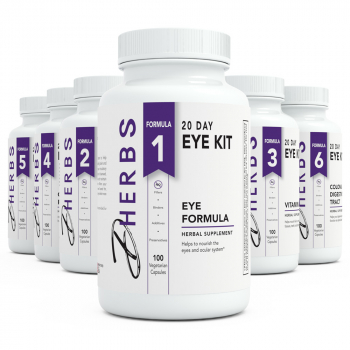
The Eye Kit takes a broader approach and currently includes Eye Formula alongside Circulation Aid, Vitamin A, Omega 3 Formula, Vitamin C, and Colon & Digestive Tract Formula, together with a modified diet and exercises described in its instructional material.
Eye Formula is therefore the simpler everyday option. The Eye Kit is the more comprehensive Dherbs eye-wellness regimen.
Eye Formula vs. AREDS2 supplements
These products should not be treated as interchangeable.
General botanical wellness vs. condition-specific formulation
Eye Formula is an herbal supplement intended for general eye and visual wellness.*
AREDS2 supplements use a specific nutrient formulation studied for certain people with age-related macular degeneration. Eye Formula is not an AREDS2 formula and should not replace an AREDS2 supplement recommended by an ophthalmologist.
Eye Formula vs. prescription glasses
Nutrition and corrective lenses address entirely different things.
Supporting eye wellness vs. correcting refractive error
Eye Formula supports overall eye health and visual wellness.* Glasses and contact lenses correct refractive errors such as nearsightedness, farsightedness, and astigmatism.
Eye Formula is not a replacement for prescription glasses or contact lenses.
Eye Formula is not a treatment for eye disease
Maintaining healthy eyes is different from treating an eye disorder.
Know when professional eye care matters
Eye Formula is intended to support normal eye and visual wellness.* It is not a treatment for glaucoma, cataracts, macular degeneration, diabetic retinopathy, retinal disease, eye infections, or other diagnosed eye conditions.
Sudden vision loss, flashes of light, a sudden increase in floaters, severe eye pain, eye injury, or abrupt visual changes require prompt professional evaluation.
What's in Eye Formula?
Our current formula contains 11 botanicals: eyebright herb, calendula flower, fennel seed, bilberry leaf, chamomile flower, ginkgo biloba leaf, lucuma fruit, cayenne fruit, carrot root, goji berry, and goldenseal root. The vitamins, minerals, carotenoids, and phytochemicals below are naturally associated with these plants.
Eyebright herb
Typical minerals: calcium, magnesium, potassium, iron, manganese, and other trace minerals may naturally occur.
Notable compounds: aucubin, catalpol, tannins, flavonoids, phenolic acids, and iridoid glycosides.
Calendula flower
Typical vitamins: carotenoids with provitamin A activity and other antioxidant-related compounds.
Typical minerals: potassium, calcium, magnesium, and trace minerals may naturally occur.
Notable compounds: lutein-related carotenoids, flavonoids, triterpenes, faradiol esters, and phenolic compounds.
Fennel seed
Typical vitamins: vitamin C-related compounds and small amounts of B vitamins.
Typical minerals: calcium, iron, magnesium, manganese, potassium, phosphorus, copper, and zinc.
Notable compounds: anethole, fenchone, estragole, flavonoids, and phenolic compounds.
Bilberry leaf
Typical minerals: manganese, potassium, calcium, magnesium, and trace minerals may occur.
Notable compounds: flavonoids, tannins, phenolic acids, and other polyphenols.
Chamomile flower
Typical minerals: calcium, potassium, magnesium, iron, manganese, and zinc may naturally occur.
Notable compounds: apigenin, luteolin, quercetin-related flavonoids, bisabolol, and chamazulene-related compounds.
Ginkgo biloba leaf
Typical minerals: calcium, potassium, magnesium, iron, and trace minerals may naturally occur.
Notable compounds: quercetin and kaempferol-related flavonoids, ginkgolides, bilobalide, and terpene lactones.
Lucuma fruit
Typical vitamins: beta-carotene-related carotenoids, vitamin C-related compounds, and niacin-related B vitamins may naturally occur.
Typical minerals: potassium, calcium, phosphorus, iron, and magnesium.
Notable compounds: carotenoids, polyphenols, flavonoids, and other antioxidant compounds.
Cayenne fruit
Typical vitamins: vitamin C, vitamin E, provitamin A carotenoids, vitamin B6, and other naturally occurring vitamins.
Typical minerals: potassium, manganese, copper, iron, magnesium, and other trace minerals.
Notable compounds: capsaicin and related capsaicinoids, carotenoids, flavonoids, and phenolic compounds.
Carrot root
Typical vitamins: beta-carotene/provitamin A, vitamin K, vitamin C, vitamin B6, biotin, and other B vitamins.
Typical minerals: potassium, manganese, calcium, phosphorus, and magnesium.
Notable compounds: beta-carotene, alpha-carotene, lutein-related carotenoids, polyacetylenes, and phenolic compounds.
Goji berry
Typical vitamins: vitamin C-related compounds, carotenoids with provitamin A activity, and several B vitamins may naturally occur.
Typical minerals: iron, potassium, zinc, copper, calcium, and selenium may naturally occur.
Notable compounds: zeaxanthin dipalmitate and related carotenoids, polysaccharides, flavonoids, phenolic compounds, and betaine.
Goldenseal root
Typical minerals: calcium, iron, magnesium, manganese, potassium, and trace minerals may naturally occur.
Notable compounds: berberine, hydrastine, canadine, and related isoquinoline alkaloids.
Give the formula time
Individual experiences vary. Our current guidance recommends consistent use and suggests allowing approximately 30 to 45 days to assess how the supplement fits your wellness routine.
100 vegetarian capsules per bottle