Pinhole Glasses are a type of eyewear that replaces conventional transparent lenses with opaque panels containing a pattern of small holes. Rather than correcting vision with a prescription lens, the perforations restrict the directions from which light can enter the eye, producing an optical focusing effect while the glasses are being worn. This simple optical effect can temporarily sharpen visual clarity and increase depth of focus for some users while providing a unique, drug-free approach to visual focus.
How do pinhole glasses work?
When light enters the eye from many different angles, refractive errors can cause some rays to focus in front of or behind the retina. A small aperture blocks many of these peripheral rays while allowing a narrower beam of light through.
Understanding the pinhole effect
Restricting the incoming light can reduce the size of the blur circle formed on the retina. This is why looking through a small hole can sometimes make an otherwise blurry object appear temporarily sharper.
Temporary visual clarity
One of the most noticeable characteristics of pinhole eyewear is that certain objects may appear clearer while viewed through the perforations. The effect occurs immediately and depends on the optical properties of the eye rather than permanently changing its structure.
Increased depth of focus
Depth of focus describes the range over which an image can remain acceptably clear despite changes in the exact location of focus. Smaller apertures can increase this range, which is another reason pinhole viewing may make certain objects easier to distinguish.
A familiar optical principle
The same general principle appears in photography, where changing an aperture influences depth of field. Pinhole eyewear applies a related concept to incoming light before it reaches the eye.
Pinhole Glasses and nearsightedness
People with myopia, commonly called nearsightedness, may notice an improvement in distance clarity when looking through a sufficiently small opening. Eye-care professionals actually use the pinhole principle during certain vision examinations to help determine whether reduced visual acuity may be related to a refractive error.
Not a replacement for myopia treatment
A temporary improvement while looking through pinholes does not mean myopia has disappeared. Anyone with blurry distance vision should still receive appropriate eye examinations and use prescription correction when recommended by an eye-care professional.
Pinhole Glasses and reading
Some users may experiment with pinhole eyewear while looking at text or other detailed objects. Because the apertures increase depth of focus, certain letters and shapes may temporarily appear more defined.
Finding a comfortable viewing position
The perforated pattern means users may need to make small adjustments to head or eye position to look through the appropriate opening. It can take a little time to become accustomed to this different visual experience.
Pinhole Glasses and screen breaks
Long periods spent looking at computers, phones and other digital displays can contribute to visual fatigue. Short breaks from continuous screen viewing are an important part of managing extended periods of near work.
Incorporating them into a break routine
Pinhole Glasses can be used during short, controlled periods as part of a broader visual break routine. They should not replace sensible habits such as periodically looking away from the screen, blinking regularly and adjusting screen position and lighting.
A drug-free visual aid
Pinhole eyewear produces its effect entirely through optics. There are no medications, supplements, electronic components or powered mechanisms involved.
Simple mechanical design
The basic concept requires only an opaque surface and carefully positioned openings. This simplicity makes pinhole eyewear an accessible way to experience the pinhole effect without specialized equipment.
Lightweight everyday design
Dherbs Pinhole Glasses are designed to resemble conventional eyewear while incorporating perforated opaque panels instead of transparent corrective lenses. Their lightweight construction makes them easy to put on for brief periods and remove when normal vision is required.
Easy to incorporate into a routine
No setup, charging or calibration is necessary. Simply put the glasses on according to the recommended directions, allow your vision time to adjust to the perforated pattern and remove them when the session is complete.
Adjusting to Pinhole Glasses
Looking through dozens of small openings is different from looking through an ordinary pair of glasses. First-time users may initially notice the perforations, overlapping visual information or an unfamiliar field of view.
Give your eyes time to adapt
Beginning with short sessions allows you to become familiar with the experience. As you learn where to direct your gaze through the perforations, using the glasses may begin to feel more intuitive.
Light reduction and pinhole eyewear
Because most of each opaque panel blocks light, considerably less light reaches the eyes through Pinhole Glasses than through ordinary transparent lenses. This is an inherent part of how the product works.
Why lighting conditions matter
Pinhole eyewear generally makes more sense in a controlled, adequately illuminated indoor environment. The glasses should not be mistaken for sunglasses or protective eyewear designed for outdoor ultraviolet protection.
Peripheral vision considerations
The opaque areas surrounding each perforation restrict more than unfocused light. They can also interfere with portions of the visual field that would ordinarily remain visible through conventional eyewear.
Situational awareness is reduced
Activities requiring broad peripheral awareness aren't appropriate while wearing Pinhole Glasses. The restricted field is one reason they should never be used while driving, cycling in traffic or performing activities where complete situational awareness is essential.
Contrast and visual quality
Sharper-looking letters or objects do not necessarily mean every aspect of vision improves. Restricting incoming light can reduce contrast sensitivity and affect other components of visual performance.
Clarity is only one part of vision
Good functional vision involves visual acuity, peripheral awareness, contrast sensitivity, depth perception and other processes working together. Pinhole eyewear can improve certain aspects of visual acuity while simultaneously limiting others.
Pinhole Glasses vs. prescription glasses
Prescription lenses are individually designed to compensate for a person's refractive error. Pinhole Glasses aren't customized to an individual's prescription and don't correct light using curved optical lenses.
Different purposes and different technology
Think of pinhole eyewear as an alternative optical viewing aid rather than a substitute for professionally prescribed eyewear. People who require glasses or contact lenses for safe daily activities should continue following their eye-care professional's recommendations.
Pinhole Glasses and eye exercises
Pinhole eyewear is sometimes incorporated into eye exercise or natural vision routines. Users may perform simple focusing activities while wearing the glasses for short periods.
Keep expectations realistic
Eye exercises and pinhole eyewear should not be presented as proven methods for eliminating myopia, astigmatism, presbyopia or other refractive errors. Their role is better described in terms of temporary visual effects and personal visual routines.
Who may be interested in Pinhole Glasses?
Pinhole eyewear may appeal to people curious about alternative visual aids, those interested in experiencing the pinhole effect, and consumers looking for a simple product to incorporate into short visual-focus sessions.
An inexpensive way to experience the pinhole effect
Because no custom prescription is required, Pinhole Glasses provide an accessible way to see how limiting peripheral light rays can affect perceived sharpness and depth of focus.
How to use Pinhole Glasses
Begin by wearing the glasses for approximately five minutes per day for the first few days. Continue using your normal prescription glasses or contact lenses during the rest of your day when they are required.
Gradually increase your sessions
Once you become comfortable with the viewing experience, sessions can gradually increase to approximately 15 to 20 minutes per day according to the product directions. Stop using them if you experience significant discomfort, dizziness or other unexpected symptoms.
Important safety information
Pinhole Glasses restrict incoming light and portions of the visual field. They can also affect contrast sensitivity and depth perception, making them unsuitable for activities requiring unrestricted vision.
Never use them while driving
Do not wear Pinhole Glasses while driving, operating machinery, cycling in traffic or performing other potentially dangerous activities. They are also not a substitute for sunglasses or appropriate protective eyewear.
Pinhole Glasses vs. Eye Formula
Optical focusing effect vs. botanical eye support
Pinhole Glasses and Eye Formula take completely different approaches to eye and vision wellness.
Pinhole Glasses use a physical optical principle to restrict peripheral light and create a temporary focusing effect while the glasses are being worn. They contain no herbs, supplements, medications or electronic components.
Eye Formula is an 11-botanical eye support supplement formulated to support and nourish the eyes and overall ocular wellness.* Its ingredients include eyebright, calendula, fennel, bilberry, chamomile, ginkgo biloba, lucuma, cayenne, carrot root, goji berry and goldenseal.
Choose Pinhole Glasses when you want to experience the pinhole optical effect during short visual-focus sessions.
Consider Eye Formula when you want a plant-based supplement designed around eye health, visual function and ocular wellness.*
The two products can serve complementary purposes because one is an optical viewing aid and the other is a botanical supplement rather than two versions of the same type of product.
Pinhole Glasses vs. Eye Tea
Optical viewing aid vs. herbal beverage
Pinhole Glasses provide a temporary optical effect through their perforated panels, while Eye Tea provides a completely different approach centered around herbal eye and vision wellness.*
Eye Tea is an herbal tea formulated with traditional botanicals to support overall eye health and vision wellness.*
Choose Pinhole Glasses when you are interested in short sessions involving the pinhole effect, temporary visual clarity and increased depth of focus.
Consider Eye Tea when you prefer incorporating eye-supporting botanicals into a daily tea routine.*
Pinhole Glasses vs. Eye Kit
Standalone optical aid vs. comprehensive eye-wellness program
Pinhole Glasses are a standalone product that can be incorporated into short visual-focus and eye-exercise sessions.
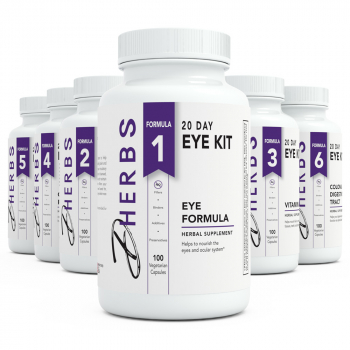
The Eye Kit is a broader 20-day herbal eye-care program combining multiple Dherbs products and accompanying dietary and exercise guidance.*
The Eye Kit includes Pinhole Glasses along with Eye Formula, Circulation Aid, Vitamin A, Omega 3 Formula, Vitamin C, and Colon & Digestive Tract.*
Choose Pinhole Glasses when you only want the eyewear and its temporary optical focusing effect.
Consider the Eye Kit when you want Pinhole Glasses as one component of a more comprehensive Dherbs eye and vision wellness program.*
Pinhole Glasses vs. conventional reading glasses
Pinhole effect vs. corrective lenses
Pinhole Glasses don't use transparent prescription lenses. Their perforations restrict peripheral rays of light to produce a temporary pinhole focusing effect.
Conventional reading glasses use optical lenses with a specific refractive power to help compensate for difficulty focusing on nearby objects.
Choose Pinhole Glasses when you want to experience a temporary optical focusing effect during controlled, short-duration use.
Use professionally recommended prescription or reading glasses when corrective eyewear is needed for normal daily vision. Pinhole Glasses should not be considered a replacement for prescribed vision correction.